DEPARTMENT OF NEUROSURGERY
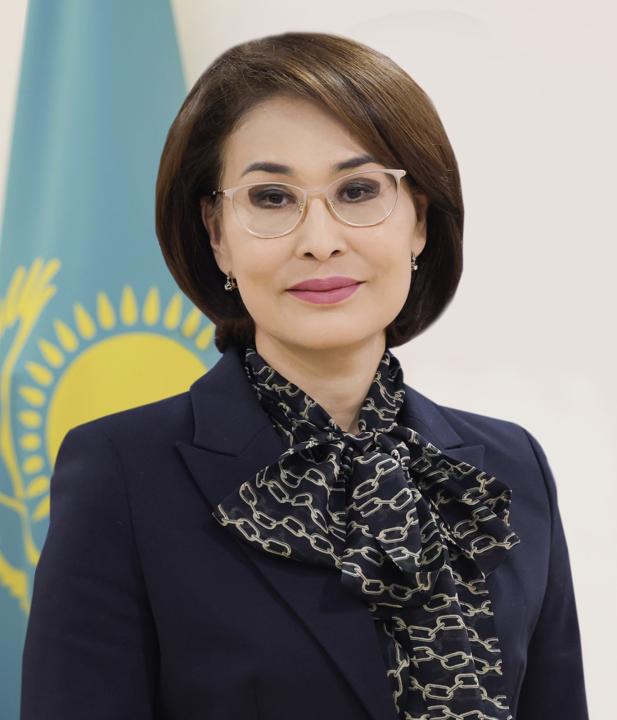
Abdukalikov Almas Isavich
Head of Department
Doctor of the highest category
The department provides planned and emergency highly specialized and specialized care to the population of a multidisciplinary regional hospital, as well as districts of the Kyzylorda region. The department has 25 beds for neurosurgical interventions.
The main directions in the development of the neurosurgical service of our department are neuro-oncology, cerebrovascular pathology, degenerative diseases and spinal injuries, and pathologies of the central nervous system. When planning any operation, minimally invasive techniques are a priority for each case. This is achieved by planning minimally optimal accesses through which it is possible to carry out the main stage without harming the surrounding tissues.
The neurosurgical department performs operations for the treatment of hemorrhagic strokes, degenerative diseases and spinal injuries at all levels, central nervous system and peripheral nervous system injuries, intracerebral purulent-inflammatory complications, as well as in the field of neuro-oncology. Close cooperation is underway with the Departments of Neurosurgery of the Moscow State Institute of Medical Sciences and the Russian National Research Center.Astana, Department of Neurosurgery, MobileKaraganda, Polenov Institute of Neurosurgery, St. Petersburg, Burdenko Institute of Neurosurgery, Moscow.
Types of medical care provided:
1. Emergency neurosurgical care (surgical and conservative) for victims with isolated and combined traumatic brain injury.
- Concussion of the brain
- Brain contusions
- Fractures of the arch and base of the skull
- Intracranial hematomas (cranial trepanations)
- Gunshot wounds to the head
- Surgical treatment of patients with post-traumatic cranial defects (plastic skull defects)
2. Spinal neurosurgery:
1. Microsurgical technologies in spinal cord and spine pathology
2. Stabilizing operations for degenerative spinal lesions
3. Microsurgical removal of the volumetric formation of the spinal cord and spine
4. Vertebroplasty, kyphoplasty in spinal pathology
5. Microsurgical removal of intervertebral discs of the spine
6. Prosthetics of intervertebral discs
7. Transpedicular spine fixation
8. Dynamic spinal stabilization
3. Neuro-oncology:
- basal meningiomas of various localization and distribution;
- neurinoma of the VIII nerve;
- glioma of the brain GI - GIV;
- hydrocephalus of various etiologies;
- arachnoid and other cysts of the brain.
- secondary brain tumors.
- tumors of the bones of the base and arch of the skull.
- MMU tumors.
4. Vascular neurosurgery:
1. Endovascular treatment for cerebral vascular aneurysms (microspirals, balloon or stent remodeling)
2. Microsurgical excision of vascular anomalies (arteriovenous malformations, arterivenous fistulas)
3. Endovascular embolization of vascular pathologies (arteriovenous malformations, arterivenous fistulas) with adhesive components
Visiting neurosurgical advisory team
The neurosurgical advisory visiting team works together with the Sanaviation department.
The main tasks of the brigade are:
1. Providing round-the-clock advisory and therapeutic care to patients with urgent neurosurgical diseases, severe traumatic brain injury
injury complicated by spinal fractures, diseases of the spine and spinal cord.
2. In accordance with the tasks assigned to the team, the following functions are assigned::
consultations and during transportation;
To perform these tasks, the field neurosurgical team has an AN-2 aircraft, a Hyundai JACi car, which is equipped with a portable echoencephaloscope, an operating magnifier with an illuminator, and a set of neurosurgical instruments.
Department equipment
All operations are performed under the supervision of a modern microscope from the world's leading manufacturers (Karl Zeis; Karl Storz, Germany), an electron-optical converter (Oscar Prime, USA); a high-frequency and plasma coagulator, ultrasound suction (Soring, Germany); microsurgical instruments and electrical devices (Aesculap, Germany).
For reconstructive and stabilizing operations in spinal pathology, medical devices from leading world manufacturers are used (De Puy J&J, USA; Metronic, USA; Stryker, USA; B.Braun-Aesculap, Germany): PLIF-, TLIF-, VLIF - cage systems; transpedicular fixation systems, including percutaneous; posterior interosseous dynamic stabilization systems - DIAM; transarticular fixation systems, "confidence" vertebroplasty systems and others.
Separation possibilities
Patients are treated according to the principles of minimally invasiveness, minimal injury and careful treatment of brain and spinal cord tissues. In our practice, we use only the most modern equipment. This allows us to significantly improve the accuracy of the fixation systems and perform intraoperative monitoring, which allows the patient to return to a full life at an earlier date. Most of the surgical procedures performed in the department belong to high-tech neurosurgical operations of a high complexity category.
Our contacts:
+7 (7242) 23-51-50
Internal number 218